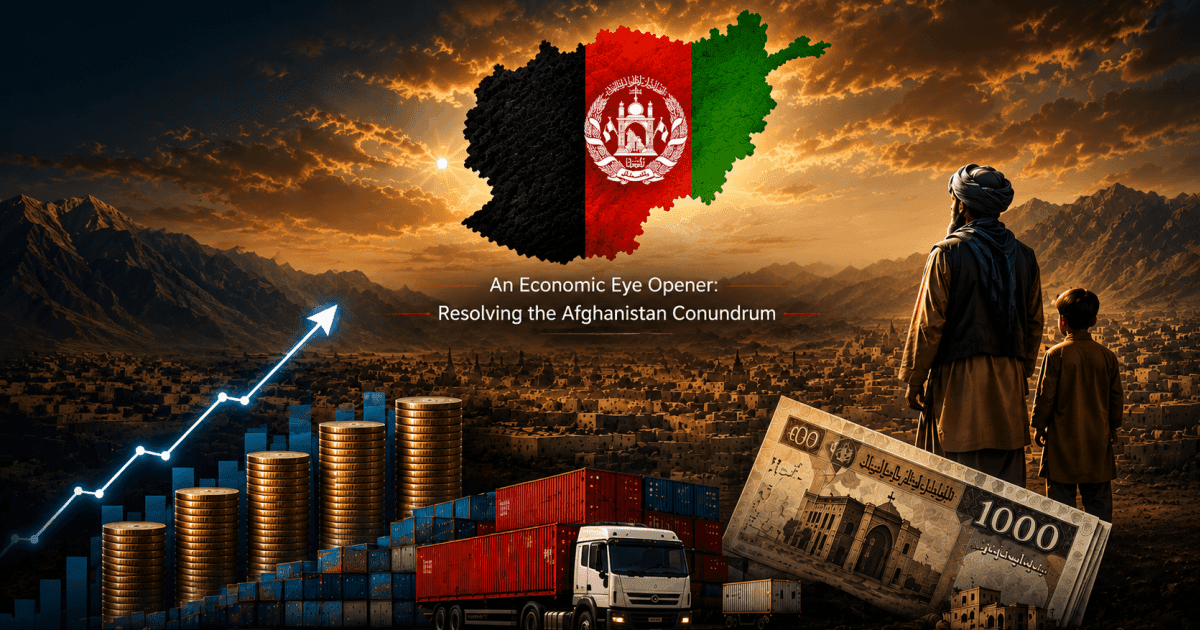
For weeks, the sunbaked border crossing at Chaman has looked less like a gateway for commerce and more like a parking lot for despair. More than 5,000 trucks sit idle on both sides of the border, their drivers sleeping in cabs or under tarpaulins, waiting for a political decision that may never come quickly enough. Inside the refrigerated trailers, Afghan grapes, pomegranates, and apples - once destined for Pakistani ports and onward to the Gulf - have turned to mush. Traders in Kabul estimate that at least $45 million worth of perishable fruit and vegetables have already rotted.
The numbers tell a brutal story. Afghanistan traditionally sends 45 per cent of its exports through Pakistan. Between 80 and 85 per cent of its legal transit trade once moved through Pakistani Seaports. Since Islamabad tightened visa requirements and border controls in early November, in response to a surge in cross-border attacks by militants operating from Afghan soil, that lifeline has been severed. Afghan officials and independent economists now calculate the damage at roughly $7 million a day, or $200 million a month. Additionally, demurrage charges alone on thousands of containers stranded at Karachi Port are running $150 to $200 per container daily.
Inside landlocked Afghanistan, the fallout is immediate and visceral. Food and fuel prices have jumped 10 to 20 per cent in a matter of weeks. An estimated 25,000 daily- wage laborers - drivers, loaders, cleaners, mechanics - have been thrown out of work, costing millions of dollars in lost wages. If the closure drags on, the World Bank and the Afghan Chamber of Commerce will further contract Afghanistan’s already fragile GDP. Winter is coming, and with it, higher demand for heating fuel and imported wheat. The pain is only beginning.
From Pakistan’s perspective, these measures are purely about security. The country’s leadership has conveyed a clear and loud message that while Pakistan seeks peace with all its neighbours, we will not tolerate terrorism from Afghan soil. Alone this year, more than 700 attacks have been carried out by Tehrik-e-Taliban Pakistan (TTP) and other groups, sheltered by the Taliban government in Kabul. In the face of such cross-border terrorism, Pakistan reserves the right to take action against terrorists and their leadership present in Afghanistan. Yet the border shutdown has also given Islamabad a powerful, if blunt, economic lever at a moment when diplomatic mediation by Qatar and Turkiye has stalled due to Afghanistan’s obduracy.
The question now is whether Pakistan can calibrate that lever without breaking the very relationship it hopes to reshape. Afghanistan, a country long troubled by internal conflict and external dependence, describes itself as the “Heart of Asia.” Yet the harsh truth is that its geography neither
supports this claim, nor provides the economic leverage often projected by its leadership. In reality, the arteries that sustain its economy run through Pakistan. Afghan Deputy Prime Minister Mullah Abdul Ghani Baradar’s calls to shift trade via Iran or Central Asia may resonate in Afghanistan, but their practical feasibility collapses when viewed through the lens of geography, economics, and logistics.
Pakistan offers Afghanistan the quickest access to the sea, with goods reaching Karachi in just 3-4 days, compared to 6-8 days via Iran and even longer through the Central Asian Republics (CARs). Cities in southern Afghanistan, like Kandahar and Helmand, lie only 150-300 km from the Chaman-Spin Boldak border crossing, while the route from Zaranj/Delaram in the west stretches over 1,200-1,300 km. In northern Afghanistan, Balkh and Baghlan are 500-700 km from Torkham, considerably shorter than the 900-1,000 km distance from Iran’s Islam Qala crossing.
Transporting goods through Iranian corridors is longer and more expensive. Rerouting shipments via Iran or the CARs can increase costs by 30-50%. While goods shipped through Karachi previously took 22-25 days, the same journey via Iran now takes 45-60 days, adding around $2,000-2,500 per container. Using Iranian routes also gives the U.S. greater leverage, as access to Chabahar Port relies on temporary waivers that may or may not be extended every six months. No country can base long-term trade planning on such uncertainty.
Afghanistan, on average, used to conduct $500 million in annual trade with India through Wagah, historically handling 90% of India-Afghanistan trade. Shifting from Attari-Wagah would increase costs by 15-20%, requiring further Indian subsidies. Perishables, accounting for 83% of Afghan exports, rely on short, low-cost routes. Using longer corridors would increase transit times and spoilage risks, put pressure on limited cold-storage facilities, and reduce the competitiveness of Afghan products.
Afghanistan has sought to bypass border closures with Pakistan by expanding air cargo exports, epitomized by its recent agreement with Uzbekistan and the likely reactivation of the air corridor with India. Never missing an opportunity to spoil, India may step up air cargo shipments in the guise of supplying medicines and humanitarian goods, while using Iran’s Chabahar port and Central Asian corridors. While Afghanistan may deem this as a measure to sustain trade, air transport remains prohibitively expensive. A war-torn, resource-scarce country simply cannot rely on air shipments as a sustainable trade channel. Likewise, the viability of long multi-modal freight corridors remains uncertain.
More importantly, Afghanistan’s demographic landscape reveals internal imbalance. Western and northern provinces, farther from major trade arteries, have lagged economically and politically. As eastern and southeastern areas lose economic leverage, power shifts to Western and northern leaders will reduce eastern commanders’ authority, revenue control, and patronage networks.
Above all, contrary to the prevailing narrative, Pakistan suffers more from Afghan trade than it gains. The country loses approximately Rs 3.4 trillion annually due to smuggling and an additional Rs 1 trillion due to the backflow of Afghan transit trade. Reducing or temporarily halting cross-border traffic limits duty-free Afghan imports diverted into Pakistani markets, curbs narcotics, illegal weapons, and potential terrorist inflows, while encouraging greater inward economic orientation in Khyber Pakhtunkhwa and Balochistan. Thus, if Afghanistan chooses to reduce its dependence on Pakistan, Islamabad would face no economic loss, only financial relief.
For decades, Pakistan has sought peace with Afghanistan through dialogue, ceasefires, and sustained diplomatic engagement, including recent talks mediated by Qatar and Turkiye. Yet Afghanistan’s hostile stance and persistent failure to curb cross-border militancy have yielded little in return. Pakistan can no longer risk maintaining trade at the cost of bloodshed on its own soil. After hosting millions of Afghan refugees for forty years - an annual economic burden of $4-5 billion - Afghanistan has repeatedly undermined the support extended to it. The message is now clear: Afghanistan must honour its commitments and stop terrorism originating from its territory, or face the far- reaching consequences that continued inaction will inevitably bring.
For the truck drivers dozing beside their rotting cargo in Chaman, and for the Kabul shopkeepers paying double for flour, ideology and grievance have already given way to a simpler calculation: survival. The sooner Kabul recognises that their fate remains intertwined, the sooner the border gates can reopen - not as a favour to Afghanistan, but as an urgent economic necessity for them.
Until then, every additional day of closure is a day that Afghanistan’s fragile economy edges closer to collapse. Political statements cannot redraw borders, shorten distances, or create seaports where none exist. For Afghanistan, there is no escaping geographical truth: Its trade, economy, and future remain inherently linked to Pakistan.
There is only one path to a face-saving for Afghans - pay heed to the writing on the wall, shun obduracy, and work out a mutually beneficial outcome by committing verifiable actions against anti-Pakistan militant sanctuaries, and ensure the extradition of TTP and BLA leaders. In doing so lies the key to Afghanistan’s economic revival, and hope for a way out of the self-created conundrum.
About the author: Izaz Ullah is an Islamabad-based writer focusing on militancy, security, and trade dynamics between Pakistan and Afghanistan. He holds an MPhil in International Relations from the National Defence University and is associated with Land Warfare Centre as a Research Associate.