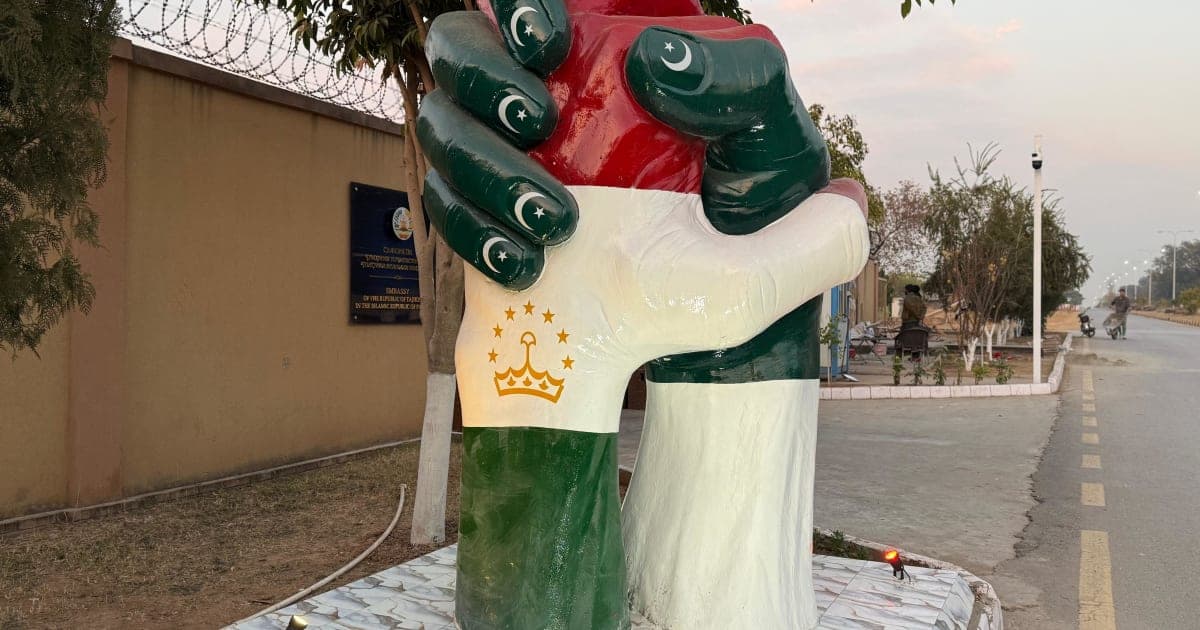
Relations between the Republic of Tajikistan and the Islamic Republic of Pakistan are particularly significant in the current historical period, when regional alliances are being remade. In terms of moral, political, and strategic aspects, the two states' ties have grown to the level of unbreakable brotherhood and alliance, surpassing both diplomatic etiquette standards and economic interests. In addition to serving the national interests of the two nations, the political axis formed by Islamabad and Dushanbe, which represent such pivotal places on the geostrategic map of Eurasia, also helps to enhance the security and stability architecture in a larger geographic area.
Despite sharing converging strategic and economic interests, Pakistan and Tajikistan remain connected more by potential than by practice. In an era marked by shifting geopolitical alignments, renewed emphasis on regional connectivity, and evolving post-Afghanistan realities, the bilateral relationship between Islamabad and Dushanbe deserves a more purposeful reassessment. Moving beyond ceremonial diplomacy toward structured cooperation could enable both countries to emerge as key stakeholders in a more integrated South and Central Asian region.
The dynamics of diplomatic relations between Pakistan and Tajikistan have continuously improved, according to an analysis of the post-independence era. The intensity of high-level reciprocal visits between the two parties contributes to the bilateral relationship's continued dynamism. Frequent meetings of heads of state, ministers, and parliamentary speakers are a crucial tool for establishing strategic plans and guaranteeing prompt reactions to new issues. The legal basis of cooperation has been reinforced and future development opportunities have been detailed in documents signed during Tajikistan's president's visits to Pakistan and Pakistan's prime ministers' visits to Tajikistan.
Energy cooperation stands out as one of the most promising pillars of bilateral ties. The Central Asia–South Asia Electricity Transmission and Trade Project (CASA-1000) symbolizes the shared economic logic of regional interdependence. By enabling surplus hydropower from Tajikistan to reach energy-deficient markets in Pakistan, CASA-1000 reflects a win–win model of cooperation grounded in mutual need and sustainability. While implementation challenges remain—largely due to regional security dynamics—the project’s strategic rationale remains intact and should be pursued with renewed political commitment and technical coordination.
Beyond energy, connectivity and trade remain underexplored areas of cooperation. Pakistan’s vision of linking the China–Pakistan Economic Corridor (CPEC) with Central Asia offers Tajikistan access to Pakistani seaports, while Pakistan gains entry to Central Asian markets. For Tajikistan, such linkages could diversify trade routes and reduce dependence on limited corridors. For Pakistan, deeper engagement with Tajikistan strengthens its long-articulated ambition of becoming a regional transit hub connecting Eurasia with the Arabian Sea. Translating this vision into reality will require harmonized customs regimes, improved transport infrastructure, and sustained policy dialogue.
Multilateral platforms further enhance the scope for cooperation. The Shanghai Cooperation Organisation (SCO) provides an institutional framework where Pakistan and Tajikistan can harmonize positions on regional security, connectivity, and economic cooperation. Within the SCO, both countries advocate for multipolarity, regional ownership of security challenges, and development-led stability. Leveraging this platform can reinforce bilateral initiatives while embedding them within a broader regional consensus.
An important catalyst in this evolving relationship has been the proactive diplomatic engagement of Tajikistan’s Ambassador to Pakistan, H.E. Sharifzoda Yousuf Tohir. Through sustained outreach, policy dialogue, and an emphasis on economic and cultural diplomacy, the Ambassador has played a constructive role in revitalizing bilateral engagement. His efforts to promote trade links, people-to-people exchanges, and mutual understanding have contributed to placing Pakistan–Tajikistan relations on a more forward-looking trajectory—demonstrating how effective diplomacy can translate shared interests into actionable cooperation.
The soft-power dimension of bilateral ties has also gained renewed momentum. The upcoming Tajikistan Cultural Week in Pakistan, scheduled from 19 to 24 December, offers a timely reminder that diplomacy extends beyond boardrooms and policy documents. Cultural exchanges of this nature deepen societal understanding, celebrate shared civilizational links, and help build durable foundations for long-term cooperation. Such initiatives complement strategic and economic engagement by fostering goodwill at the public level—an often underutilized but essential pillar of foreign relations.
Reinvigorating Pakistan–Tajikistan relations does not require grand gestures, but consistent, incremental steps supported by political will. Regular high-level exchanges, joint economic commissions with measurable outcomes, and institutional follow-through on existing agreements can gradually transform goodwill into tangible cooperation. In doing so, both countries can demonstrate that regional partnerships need not be hostage to uncertainty but can instead be engines of stability and growth.