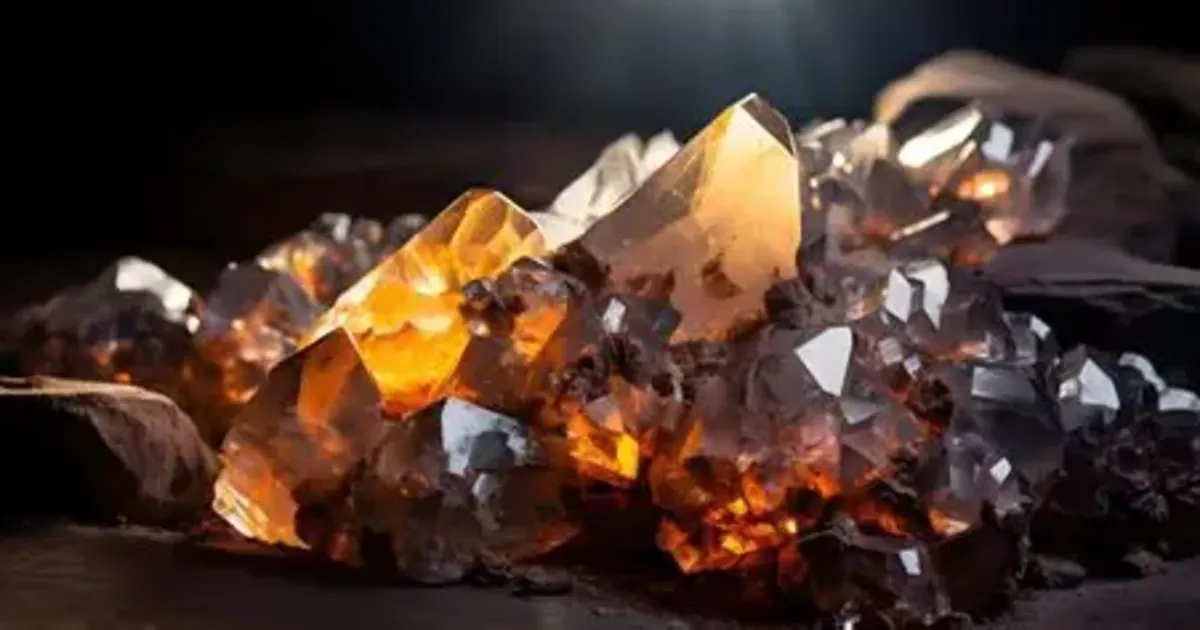
In the twenty first century, the power struggle no longer solely revolves around the traditional tools which were once seen as coal and iron and later replaced by the oil and Gas in twentieth century. Instead, it increasingly depends on something less visible and but equally decisive: Rare Earth Minerals. These seventeen minerals essential for everything from smartphones and electric devices to missile systems and satellites form the backbone of digital and green economies. The global race for these resources is, in truth, a Gamble over who will control the future of technological dominance. Rare earths are often described as the “new oil.” Just as oil powered the industrial age and shaped geopolitics in the twentieth century, rare earths are powering the digital and green revolutions of our era. Without them, the clean energy transition is impossible. Moreover, they are indispensable in military technology—fighter jets, drones, radar systems, and precision-guided missiles. Whoever secures rare earths secures not just economic growth but also national defense.
At present, China holds the winning hand. Controlling around 60–70 percent of global rare earth production and nearly 90 percent of refining, Beijing has built both a monopoly and a strategic weapon. The 2010 episode, when just a restriction of rare earth exports by China to Japan during a diplomatic dispute, not only revealed the vulnerabilities of global supply chains but also highlighted the Chinese growing influence in this world. Since then, Beijing has pursued a deliberate strategy: signing agreements with African and Asian states for the sake of mineral dominance to feed domestic high-tech industries, from battery production to electric vehicle manufacturing. In effect, rare earths have become a real force behind Chinese rise and geopolitical influence.
The West is scrambling to respond while realizing its torpidity. The United States has retorted classifying rare earths as critical to its national security and is investing heavily in alternative sources to fulfil its requirements. The Trump administration’s first term set the stage to establish close ties with Taiwan which was further advanced under Biden’s presidency and Now Trump 2.0 has been very actively deploying protectionist policies managing both fronts, on one front, Washington is competing with Beijing to safeguard its global standing and on the other utilizing its hard power to consummate rising industrial requirements while seeking control over the strategically vital locations such as Greenland. The growing focus on Greenland and Ukraine not only highlighted their importance in the US and also become source of tension with European Union. Australia, Taiwan catch global attention with their rich reserves, have become central partners. When European Union has passed its Critical Raw Materials Act in order to ensure sustainable supply of critical raw materials and to reduce dependence on China, US has signed agreement with Pakistan to get access to these rare earths. Japan and South Korea are pursuing ties with African producers.
Yet the challenge is immense as on one side these minerals are very beneficial also have high costs. Mining and refining rare earths is costly, environmentally hazardous, and politically controversial. Local communities often push back on new projects due to the health hazards, At the same time, many developing nations worry about being reduced to little more than suppliers of raw materials for wealthier powers. Here lies the gamble. If nations focus completely on securing rare earths, underestimating costs, they risk repeating the same mistakes of the oil era, which resulted in geopolitical rivalries, resource nationalism, and devastating environmental fallout, leading to severe wars and loss of human lives. Rare earth mining is already observed for its toxic waste and water pollution. In trying to get mineral independence from China, Western nations could easily end up starting new ecological disasters and exploitation across the Global South. This irony is hard to ignore in our rush to build a greener future, we might end up poisoning the very planet we are trying to save.
In the end, rare earths have far more importance and role than just a mineral. They stand at the crossroads of technology, the environment, and global politics. The way we choose to manage this challenge will decide not only who leads the digital and green revolutions, but also whether we can balance our drive for progress with our duty to protect the planet we all call home. The real challenge is learning to secure these critical resources without repeating the bitter lessons of the oil age—conflict, exploitation, and environmental ruin. I believe the future will not be defined by which nation has the largest army or even the strongest economy. Instead, it will belong to the country or perhaps the coalition that learns how to play the rare earth gambling wisely, combining technological ambition with pure environmental responsibility. That balance, not savage power, will decide who truly shapes the world of tomorrow.